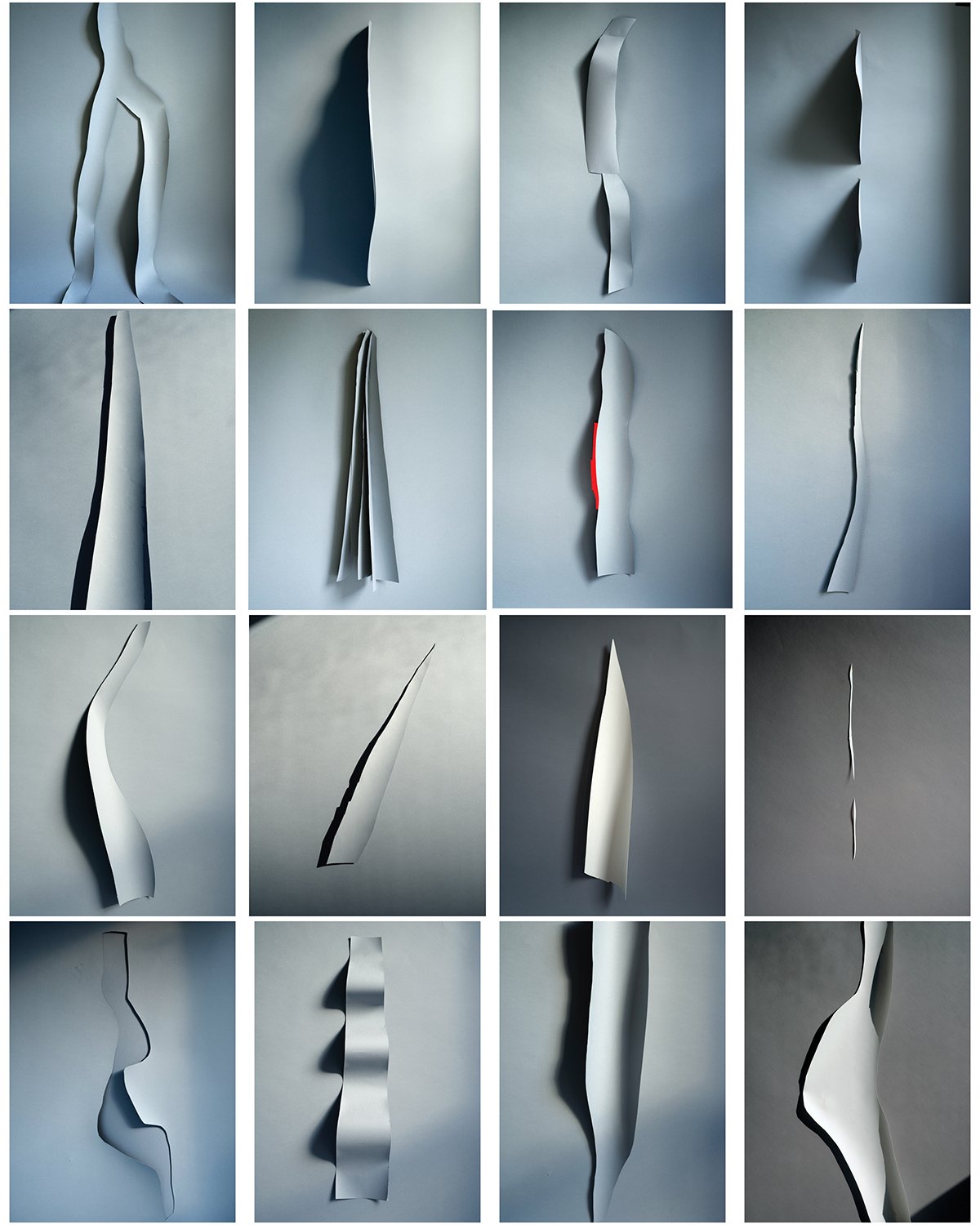
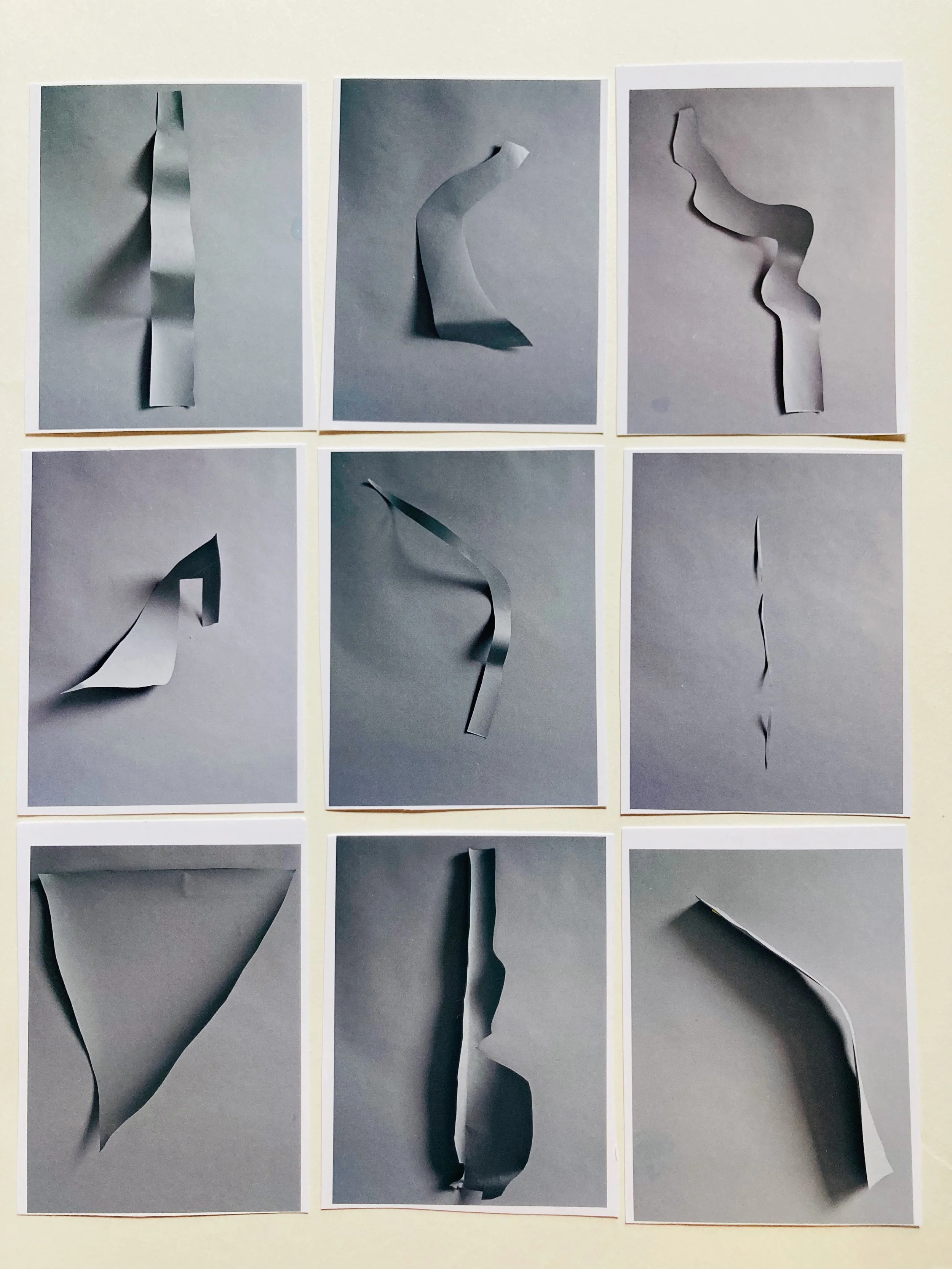
winter edition of Studio Stimulus: Shooting outdoors,  inspirational archives, Lensculture interview, new work and more

Department of Inspiration

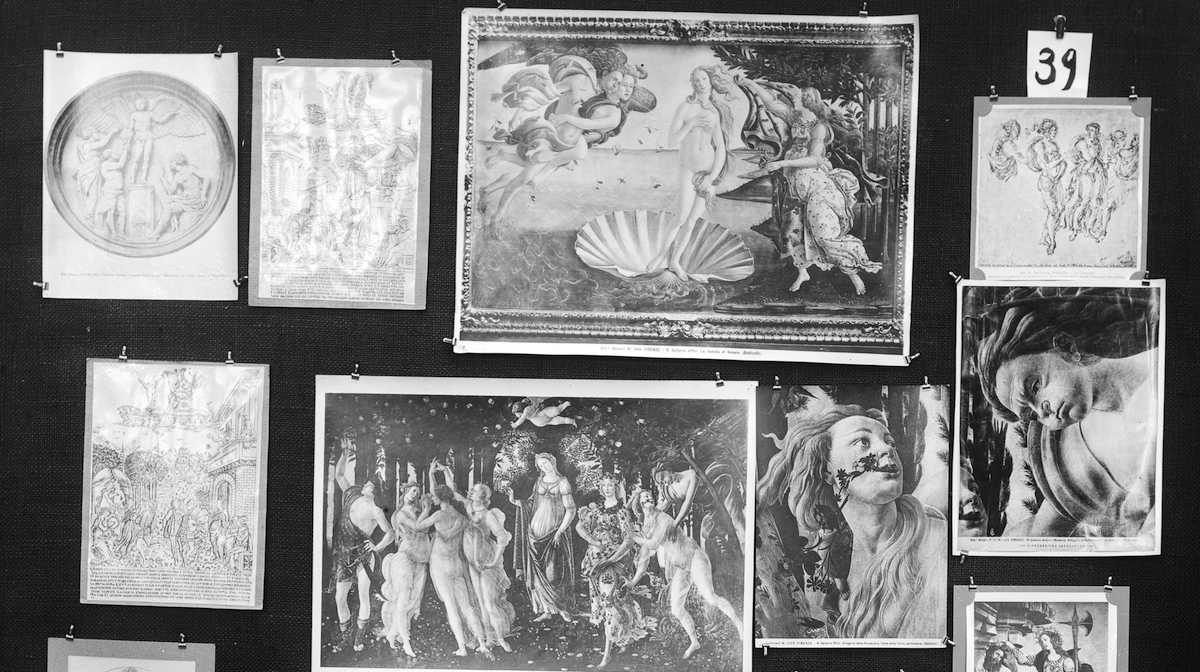
A few weeks ago I visited the Warburg Institute in London--a place that has loomed large in my imagination since I discovered Aby Warburg’s Mnemosyne Atlas. At the library desk, I nervously presented my recommendation letters to gain access to this world where the books are shelved according to the “law of the good neighbor”, in unique, kindred arrangements. I leafed through exquisite, rare books, read up on curses in the stacks among the science and magic books (science and magic, together!). I spent hours poring over a massive folio of the Mnemosyne Atlas panels--it was so big I had to turn the pages while standing. I toured the photo archive and handled artifacts that changed my understanding of the original panels.

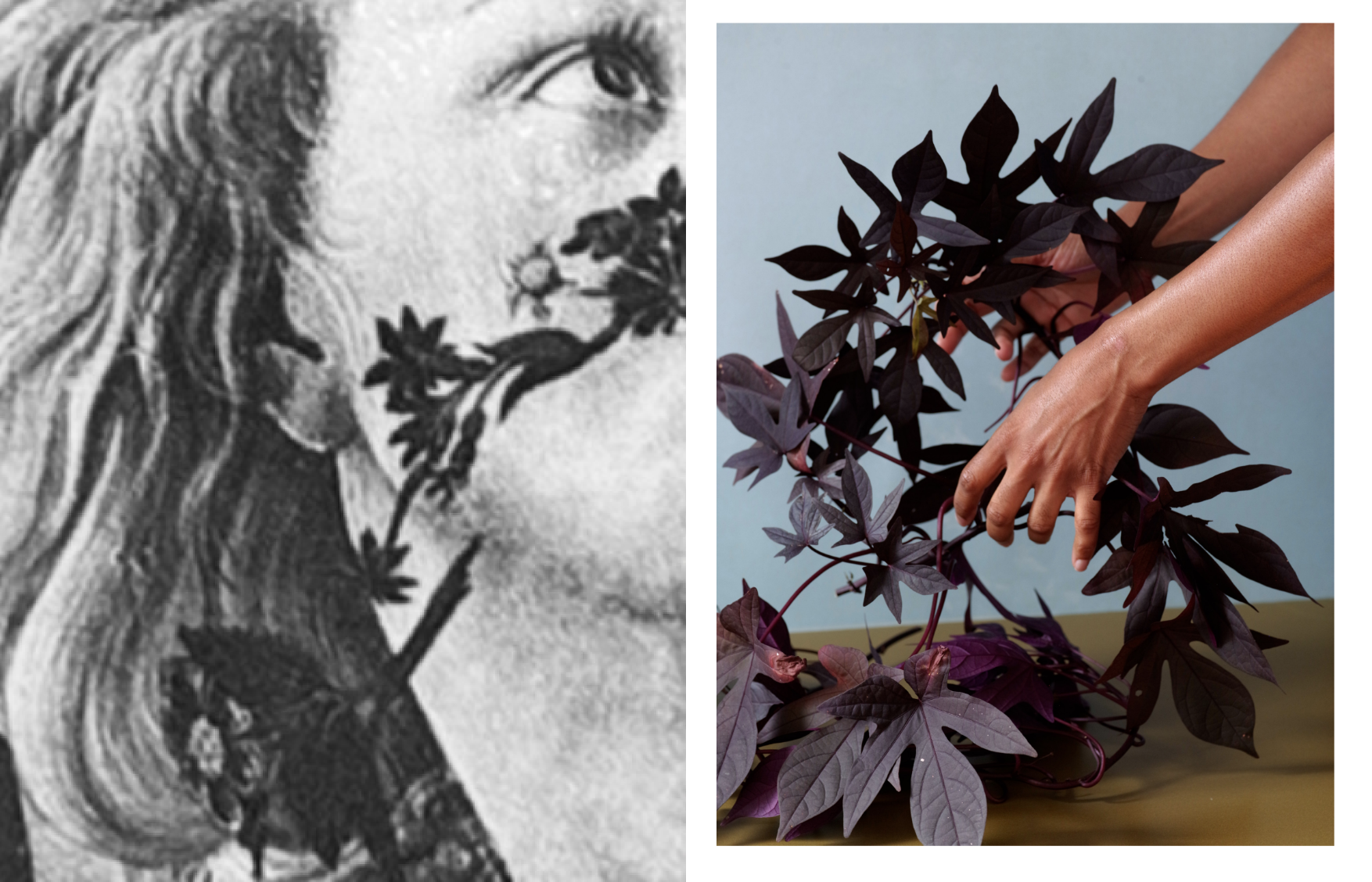
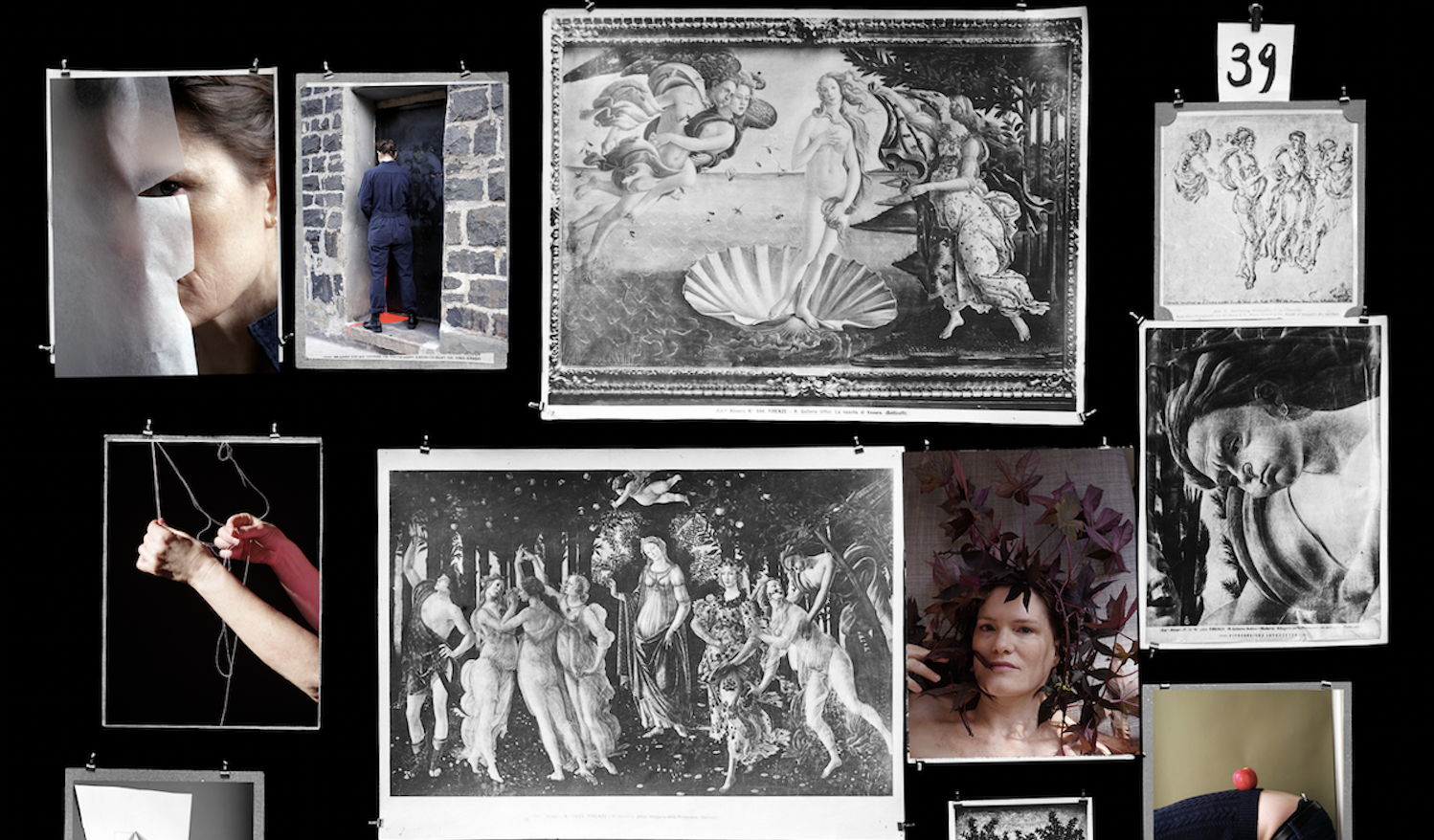
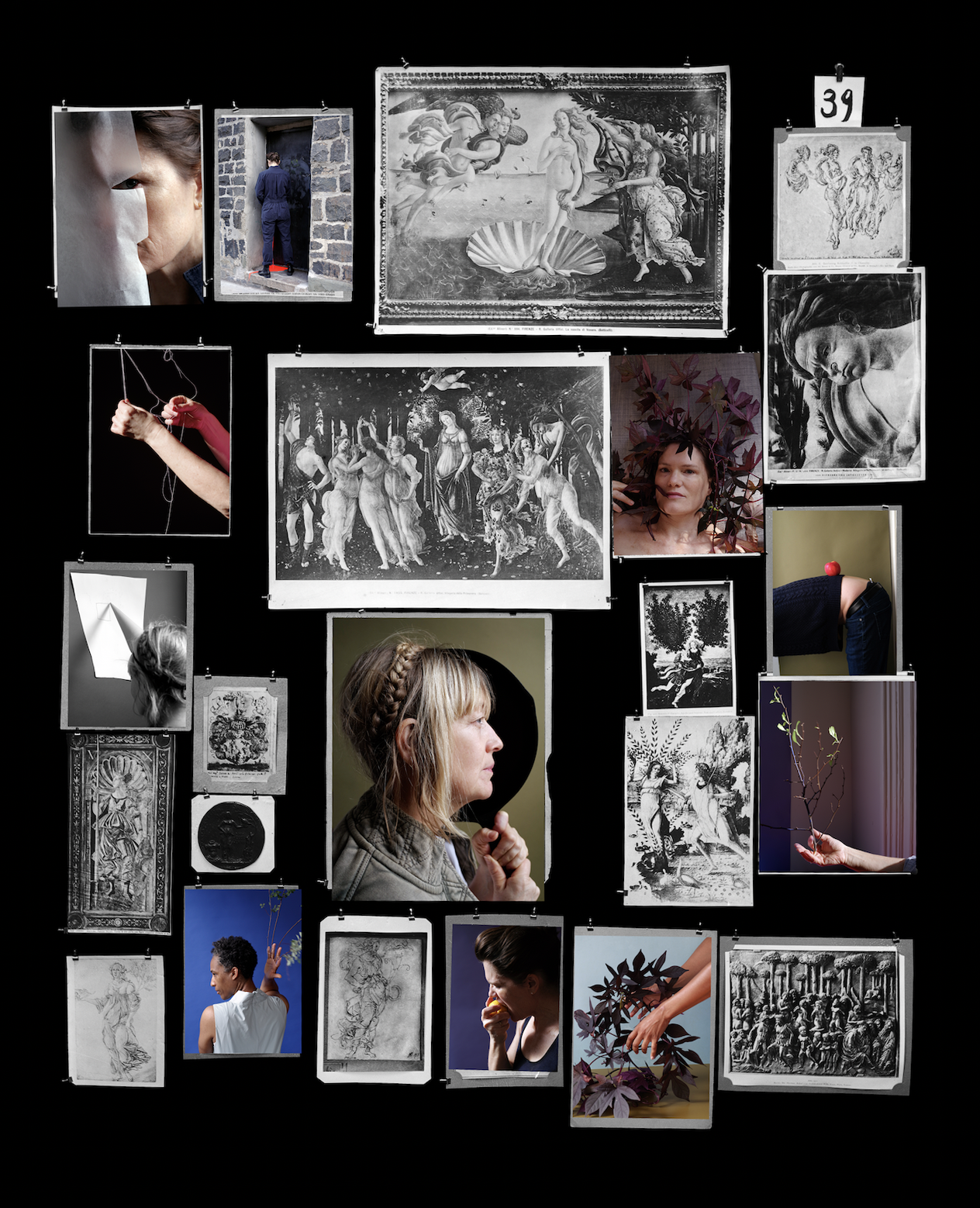
Eyes glaze over when I mention the Mnemosyne Atlas, so I’m offering this image--a digital collage of my own images layered on top of Atlas panel 39, to show one of my most direct visual interactions. I printed it large recently and it works well.
 

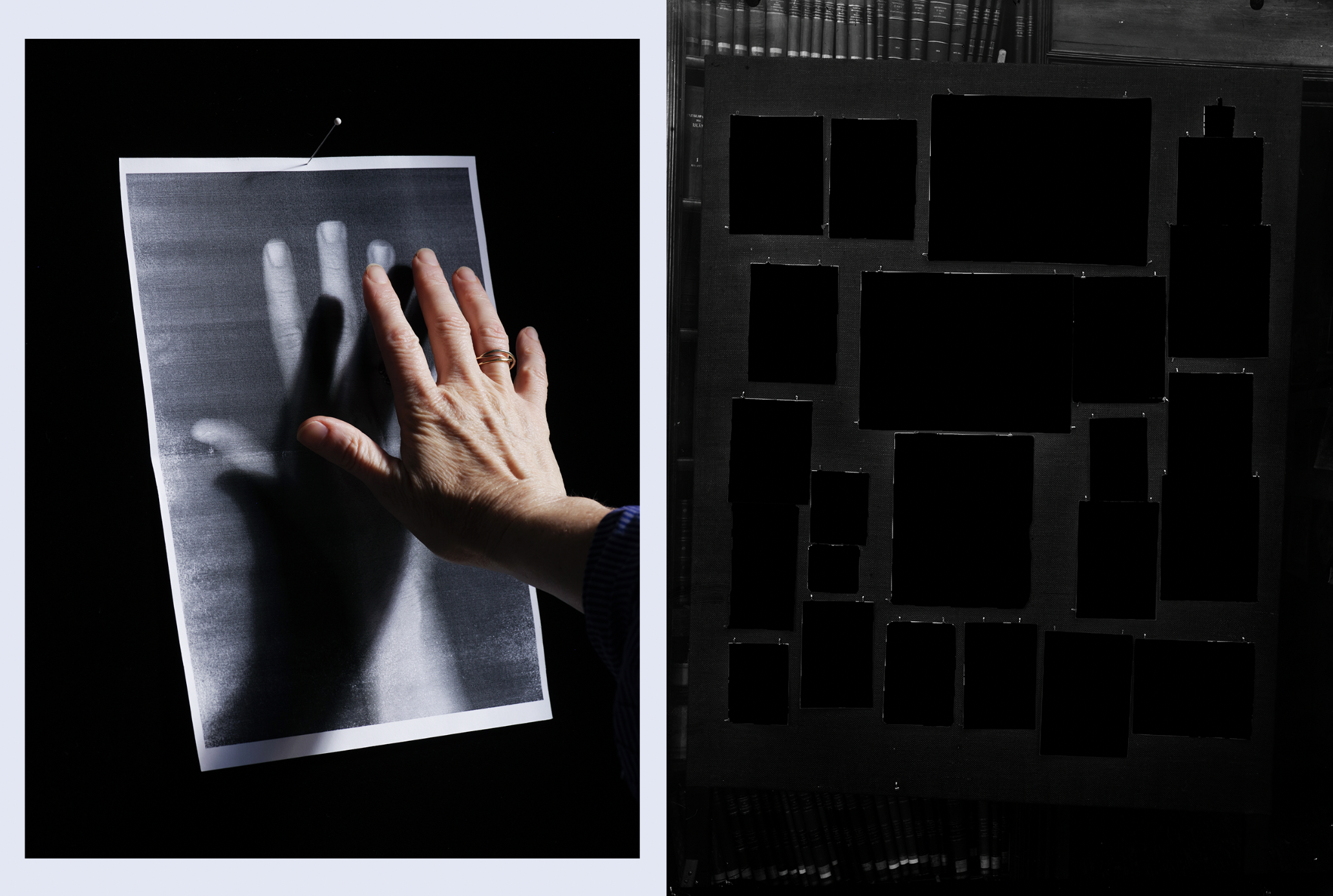
My newest images explore the idea of the archive and the Atlas as a mental architectural and visual graphical space. In the test layout below, you can see the panel background and the bookshelves beyond it, but not the images themselves.

News

  • I was interviewed by Sophie Wright about Clay Feet on Lensculture, where, for better or worse, I tell the personal backstory of the project.

  • My work was exhibited in a group show hosted by FotoSlovo in Cyprus, Greece.

  • In September I went to the Filter Photo festival in Chicago to show prints and the book mockup of Clay Feet. It was gratifying to hear the words original, fresh and exciting applied to the work by experts. It was also very cool to be introduced to the work of overlooked Italian artist Ketty LaRocca, in a show of performance based photography at the MoCP.  

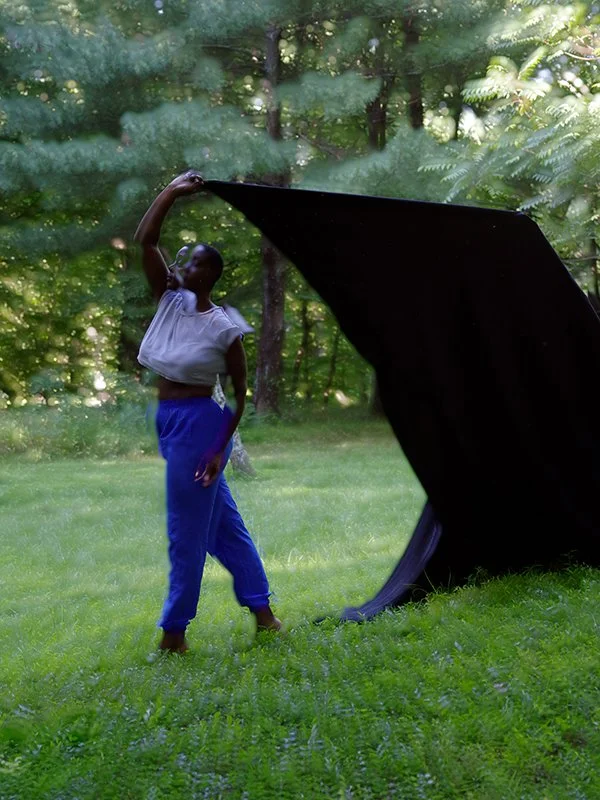
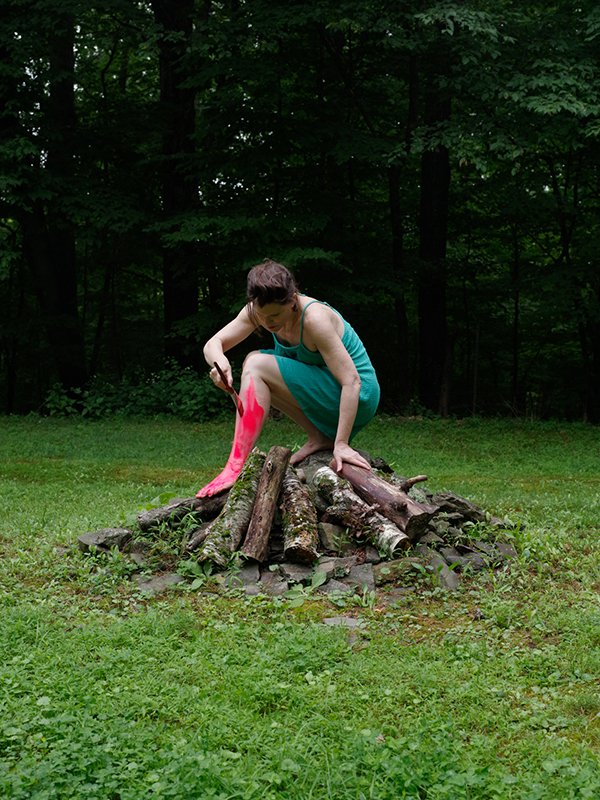
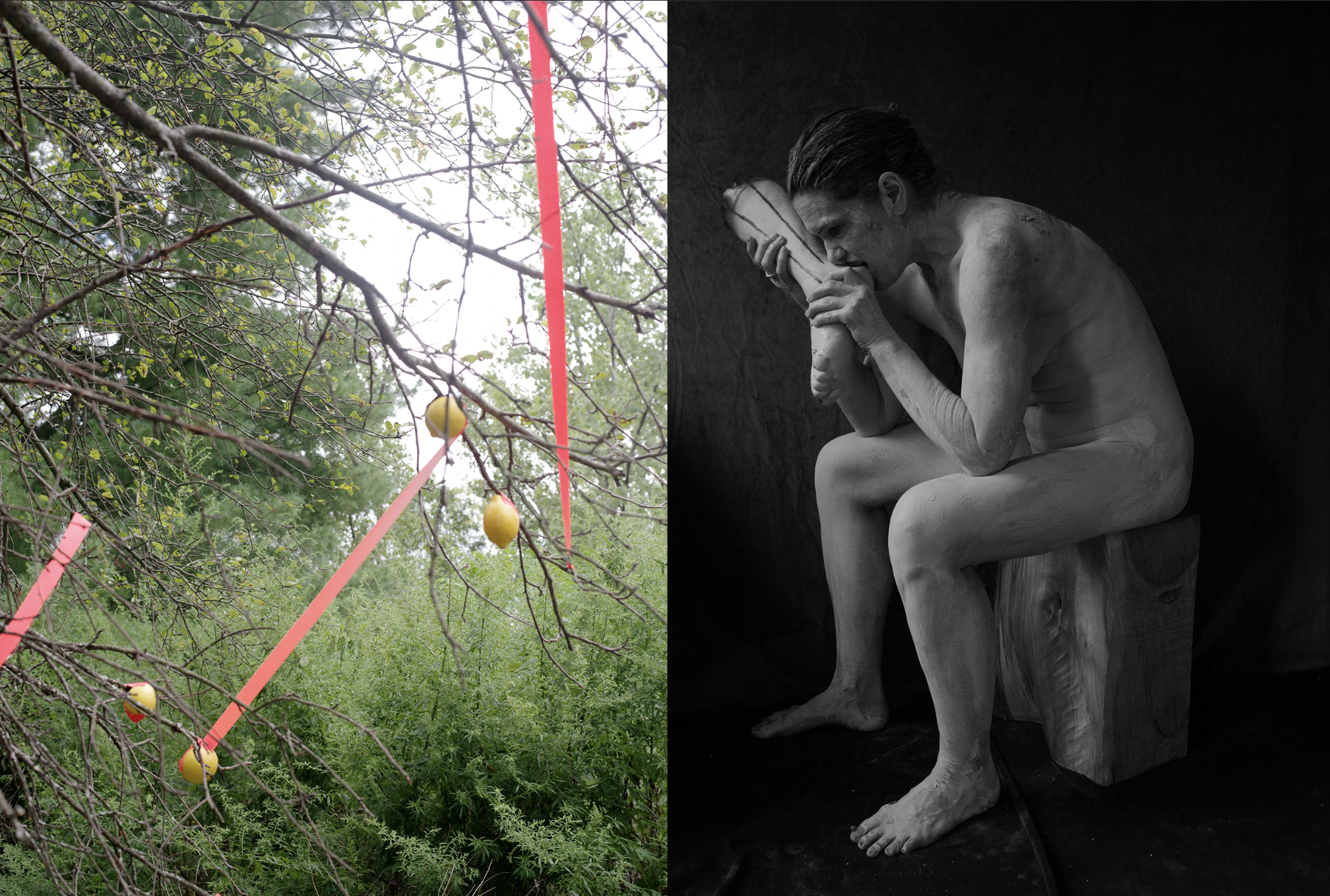
  • Self-funded residency: In August I shared a house in Catskill, NY with a photographer friend, Jennifer Karady, and her partner. We accelerated our work by talking through plans and modeling for each other. We collected botanical specimens, cooked and swam. I shot outdoors and loved having space around me. It was highly productive, but I worked in a state of near frenzy, because having my days free to work in a new setting was unusual and precious. 

A few favorite things from 2025

Art: Insoumissions by Francine Saillant and Camille Courier, St. Louis Chapel, Paris, France, Louis Bourgeois at Hauser & Wirth, Jack Witten at MOMA, Superfine: Tailoring Black Style at the Met.

Article: Some People Can’t See Mental Images and the Consequences are Profound, by Larissa MacFarquhar.

Beach: Sir Francis Drake Beach, Point Reyes, CA.

Book: Sexual Visions: Images of Gender in Science and Medicine Between the Eighteenth and Twentieth Centuries by Ludmilla Jordanova.

Distraction: Correspondence via paper letters.

Recipe: Lamb tagine.

Reporting/personal essay: I want you to understand chicago by Kyle Kingsbury.

Film: Something of Value

Open-water Swim: Ohio Street beach, Chicago, ILL.

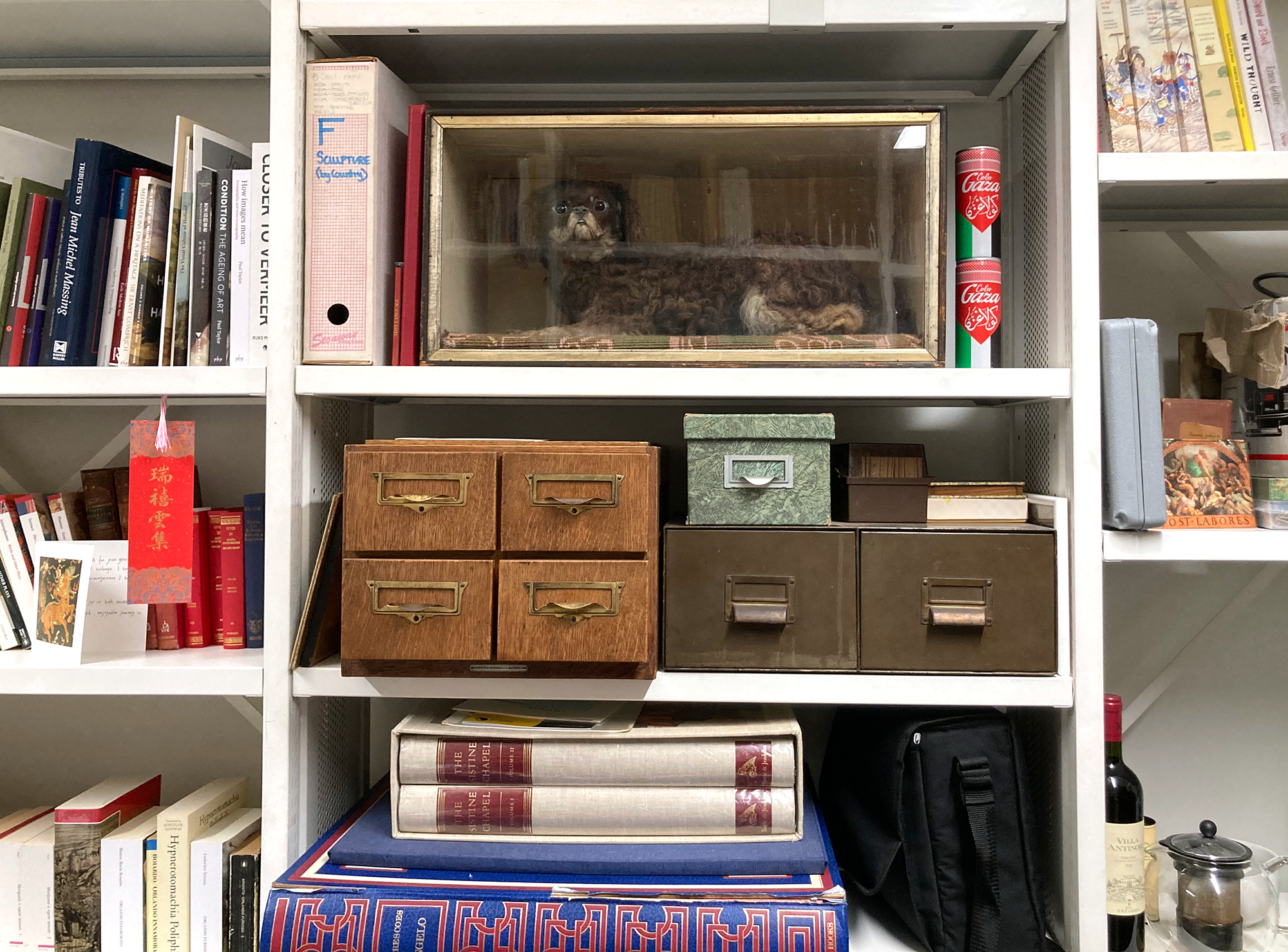
Bookshelf: Paul Taylor's office, Warburg Institute, London.

NOTE: I'm looking for a strong feminist writer to pen the essay for Clay Feet, the book--please let me know if you have a suggestion.

Studio Stimulus: Summer Edition

Catalyst: Department of Inspiration
I'm working on a book mockup of Clay Feet, and it's exciting to see it adapt and expand. I'm discovering gaps in the story, so I'm still shooting new images. Casting models from a wider pool has been great. It was helpful to realize that the images about my personal experience make sense as self-portraits, but the more tightly art history related images should be other characters. 

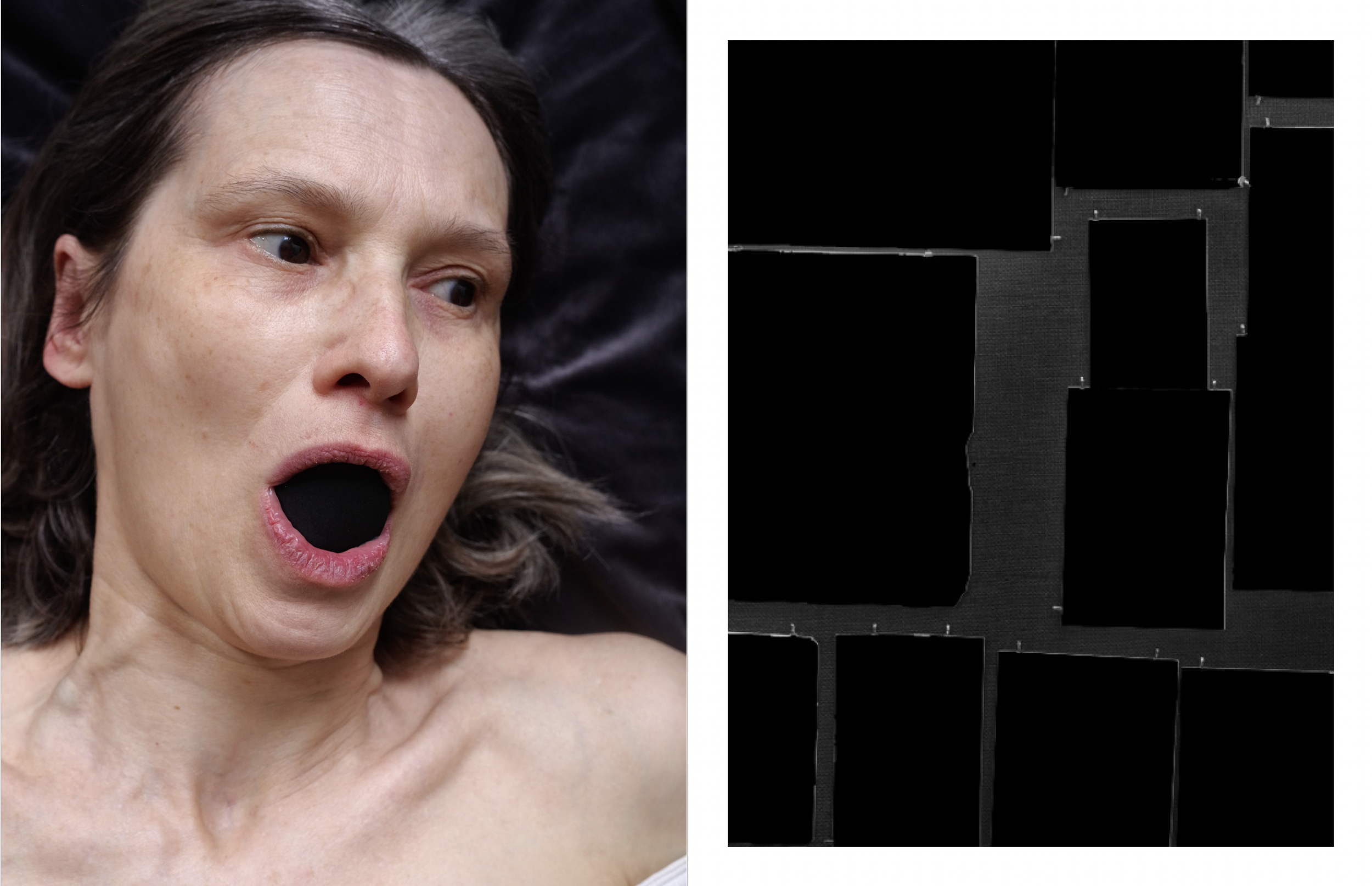
I've started making my own Mnemosyne Atlas style image clusters. Alternately satisfying and frustrating, these image groupings are generating new ideas  and sub-categories while getting me closer to the encyclopedia-like book I’ve been craving. The breast-chain image on the left is a self-portrait I made last summer about a kind of monstrous femininity, one that does not care to nurture. On the right is an example of one the groupings. 

Sample page layout from my Clay Feet mockup

My Muse: Scholar and Werewolf
In order to focus on the Atlas images, I've avoided reading about Aby Warburg himself, but I recently read an article I’d been saving. Turns out, he was afraid that he was turning into a werewolf! Is it possible that the images in the Atlas may have been the result of a mania or a kind of talisman collecting? Warburg had a medallion of Fortuna, and he was obsessed with it. He even accused his wife of stealing it, but then admitted that he had probably hidden it. Did he see the creatures and monsters in his Atlas as his cohort, or as protectors, or as terrifying reminders of his own condition?

At the Salpêtrière
At the beginning of July, I went to the International Society for the History of Neuroscience conference celebrating the 200th anniversary of Jean-Martin Charcot’s birth, at the Pitié-Salpêtrière University Hospital in Paris. It was like going to grad school inside a walled medical city, and I loved every minute.

I learned about early neuroscience-but I was also haunted by the spectacle of the semi-naked ‘hysterical’ woman, the specimen with the white nightgown forever slipping off. One image, showing the so-called Arc de Cercle, kept resurfacing. Even the notorious Brouillet painting of Charcot includes a drawing of a female body locked in Arc de Cercle, on the far wall. 

A highlight was an exhibit in the Chapel Saint-Louis church. The nave was taken over by an impressive exhibition about the women and men who were patients, by the artists Camille Courier and Francine Saillant.

Dept of collaboration
In Paris I met in person with the brilliant gallery co-directrice Emilie Houssa, from the Centre Claude Cahun, and the talented Parisian photographer Céline Clanet and shared my book mockup. I love Clanet's thought-provoking book Second Skin and it was incredible to hold it in my hand and turn the pages. 

In early summer I had an epic Zoom studio visit with Melanie Manos, multimedia badass, performance artist and professor whose work inserts women into public spaces, sometimes virtually, sometimes physically. Her tricky mosaic images fit her body into claustrophobic spaces-detail below. 

“Aand Stretch” detail, courtesy of Melanie Manos

News

  • This week I will be participating in a panel discussion, Science Illustrated for the lecture series Simons Presents, at the Simons Foundation on Friday night, July 18th. It’s sold out, so wish me luck. 

  • I wrote about Brazilian photographer Gui Christ’s project M’kumba for Lensculture, which schooled me on Afro-Brazilian religions. As a journalist, it was challenging to describe how Christ changed direction in his photography project based on advice given by an ancestral spirit. But as an artist, I was jealous of his experience. 

  • At work, I’ve been creating fast in-house illustrations for a host of breaking news articles on funding cuts and firings in science. The stories are heart-breaking, but it feels good to be able to do at least this one thing.

  • I was honored to review design and illustration portfolios for The One Club in Manhattan.

Miscellany
You can protect your artwork from being ingested by AI models by adding Glaze/Nightshade to your images. I haven’t applied it to my work yet but I want to. 
Inspo share: Public Domain Review archive: Search for anything and be amazed and delighted by the results.

A fantastical hand with two fingers and thumb raised

Peace, from the Pantea hand, by Filippo Palizzi, courtesy of the Public Domain Archive. 

Thanks for reading! You can subscribe to Studio Stimulus from the Rebeccahornephotography.com About page. 


I hope this newsletter can reclaim space from social media, and allow for a deeper conversation. I'm still on IG @rebeccahorne600, mostly to keep up to date with other artists.

Data pictures collection takes a turn

It’s been a mad, mad summer. At the start, I had a series of experiences that made see that the patriarchy is never really done with women. These experiences have been woven into the work as have the new feelings of independence that have given me license to experiment. It’ been a heady combination of anger, joy and discovery.

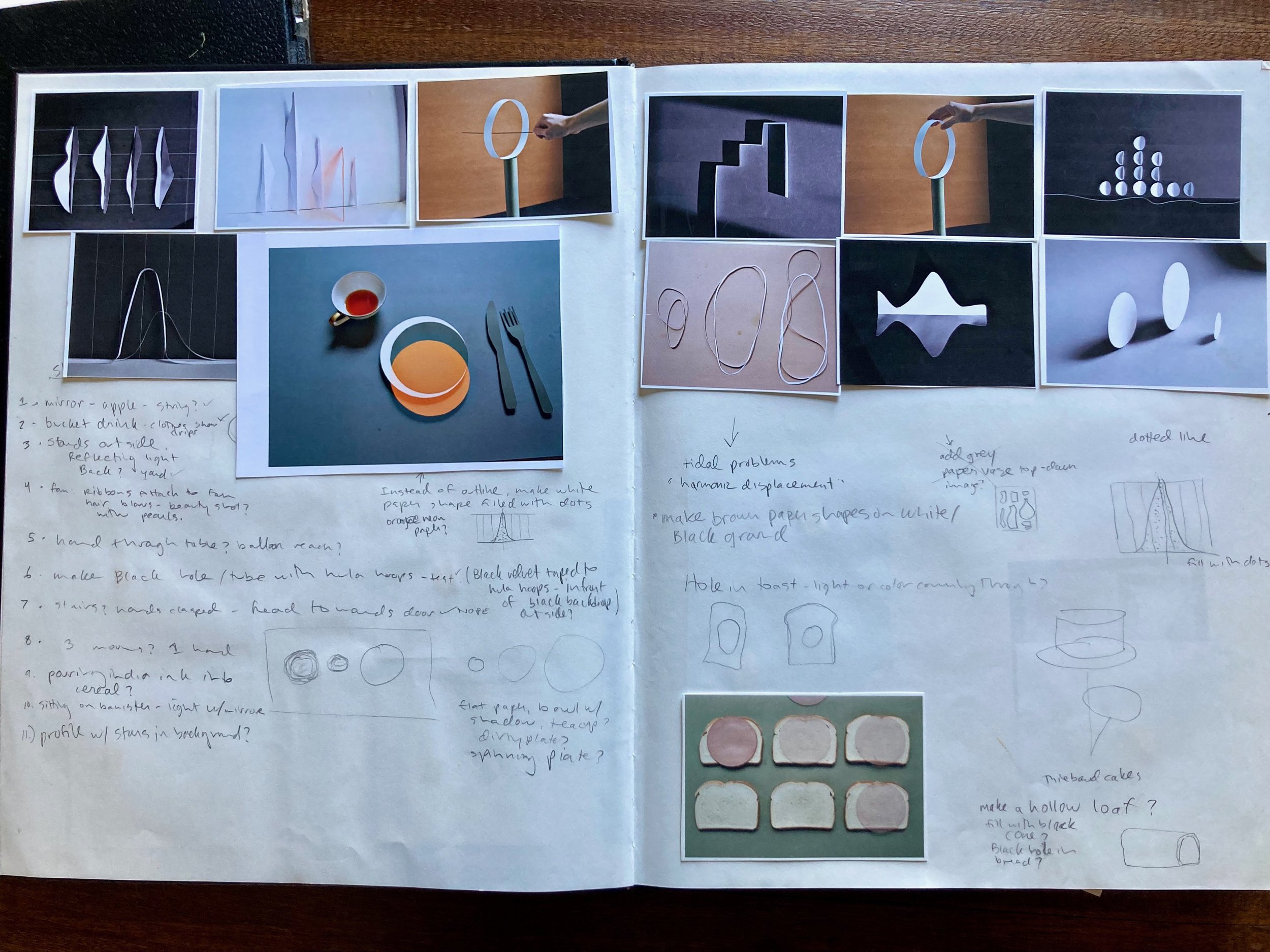
I’ve had to update my artist statement for this project—things have evolved: The Data collection invites contrast of dry data with the messy intimacy of food, fluids and emotion. Data is information, and the Collection tries and fails to quantify emotion, consumption, sex. 

Food, measured and allotted, translates into the space we take up in the world. Food is conduit for pleasure, connection, comfort, sustenance. Also control, and appetite. The alchemy of the ordinary. Paper stands in for abstraction, ideas, flatness, transcendence.

Summer of beginnings / endings

After leaving my son Oliver at college on Friday, I found myself traversing a bare and lonely mental space. I could hear the wind whistling in my ears. 

This person I had built my life around for seventeen years was leaving. He gave my life momentum, meaning and structure. Driving away, time stretched both forward and backwards—to the hospital where he was born, breastfeeding, catching him when he fell down the stairs. Now where was he? He was away. And moving ever further. 


In the days leading up to his departure, both of us were in shock. We shopped joylessly for his dorm room. We ate a rare meal at McDonald’s in the mall. We took the subway. I felt that I should be performing a tradition or ritual to mark the occasion but didn't have it in me.

Friends remind me that this separation repeats in mini cycles—they come home, and then leave again. I’m glad not to be the only person going through this, but I know that my bond with Oliver as a single parent and only child has an intense primacy. 

Then there is the question of the unfinished art project—The Alchemist. Oliver and I have been working on it for three years. We started it during the pandemic. Initially, the plan was that we would enact key moments from the book, as a series of photographs, with Oliver as the protagonist. In October 2020, I wrote:

Just finished The Alchemist by Paulo Coelho—a book that has been on my shelves, unread, until Oliver picked it up recently and read it. It is an allegory about a boy shepherd finding his treasure. The boy’s character is very pure and light and it suffuses the book, which is simply written, but rich in meaning. At the end of the story the actual treasure is found, but the boy’s life is so full and he has learned so much by the time he finds it, the treasure seems extraneous. The real treasures are his encounters with the Soul of the World, enabled by various teachers, his own good nature, and following his own destiny.

The book forced me to think more deeply about ideas like destiny. Much is written about how fortune favors those who follow it. Only not all of us have a king in disguise appear to us and reveal it. This line, “The boy was beginning to understand that intuition is really a sudden immersion of the soul into the universal current of life, where the histories of all people are connected, and we are able to know everything, because it is all written there,” stood out to me as beautiful. Could this be true?

His journey starts with a repeated dream, which he goes to a fortune teller about. Other themes are omens, and listening to your heart. The boy has some long conversations with his heart. 

He eventually learns to speak the Language of the World. In a dramatic scene, he talks to the wind and the sun and finally, he uses love and prayer to reach the hand that wrote all, in order to turn himself to wind. This is also where he understands for the first time that he is a part of the Soul of God. There is a line in the book where a wise person notes: A blessing ignored becomes a curse.

In our last days together, I was not able to shoot the Alchemist images I had sketched out. There was no way I could begin to approach making art. I will have to return to it next time I see him. I’m not sure this series will ever be fully complete, but I know I can bring it closer, and I think it may become a book.

Endings are not just new beginnings in disguise. They must be mourned and acknowledged. I must be like the boy on his journey—learn to be the wind, or to become one with it. Then the sound in my ears will be the sound of movement, passing through pain, becoming the world, not standing outside of it.

Valence Inventory poster ready to ship

Introducing Valence Inventory, a playful photographic take on atomic preferences — the joining patterns of elements in the periodic table. Valence can be deduced from the relative position of each element in the table. Valence Inventory is available as a 23x35”poster, digitally printed on 50 lb. Durotone. The poster design is by Francesca Richer, printed by Puritan Press. You can order it here: https://www.rebeccahornephotography.com/shop

Valence Inventory is a grid of 25 images closely related to each other in color, shape and form.

Why Valence? Because observation leads to more linked paths, planes and values. Why Inventory? Because Minecraft players get an object inventory on a grid. Because I love collections of images. Because I have a storehouse of shapes and images.

Why make a poster? It seemed like it would be a lighthearted way to share what I’ve been working on.